
2022 EPA Water Conference
The EPA Water Conference took place in Galway and online on 18 and 19 May 2022. Speakers shared their knowledge on how to protect & improve water quality and showcased case studies from around Ireland. You can learn about the state of Ireland’s waters, European and national policy, and the development of plans and work at national, regional and local scale.
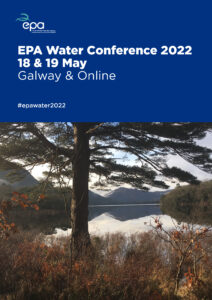
2022 EPA Water Conference – Conference Programme
2022 EPA Water Conference – Videos
Session 1: Setting the scene
Session 2: Agriculture
Session 3: Hydromorphology
Session 4: Health and water services
Session 5: Policy and people
Session 6: Local measures and solutions in action
| 15. Progress with the Areas for Action, data sharing and the LAWPRO referrals process | Gary O’Connell Catchments Manager, Border Region, LAWPRO |
| 16. Improving bathing water quality in Lough Ennell | Jonathan Deane Senior Engineer for Water, Environment and Climate Change, Westmeath County Council |
| 17. Steps to build in Nature Based Solutions in a congested Public Realm Project Area | Leonore O’Neill Senior Executive Officer, Ennis Municipal District, Clare County Council |
| 18. Sliabh Beagh habitat restoration. Co-benefits for the sites water quality. | Dr Rory Sheehan Climate Action Co-Ordinator, Louth County Council Paul Sherlock Collaborative Action for the Nature Network (CANN project), Monaghan County Council |
Who is involved?
Quite simply, everyone in Ireland has a role to play. This can be from something as simple as making sure you don’t pollute your local stream, or a local community working together to establish a Rivers Trust to enhance the rivers and lakes in their area, to a Government Department or Agency helping a Minister implement a new policy to help protect and enhance all our water bodies.
This website has been developed and is maintained by the Environmental Protection Agency, and is a collaboration between the Department of Housing, Planning and Local Government, the Environmental Protection Agency, and the Local Authority Waters Programme.

Local Authority Waters Programme
The Local Authority Waters Programme coordinates the efforts of local authorities and other public bodies in the implementation of the River Basin Management Plan, and supports local community and stakeholder involvement in managing our natural waters, for everyone’s benefit.
Environmental Protection Agency
The EPA is responsible for coordinating the monitoring, assessment and reporting on the status of our 4,842 water bodies, looking at trends and changes, determining which waterbodies are at risk and what could be causing this, and drafting environmental objectives for each.

Department of Housing, Local Government and Heritage
The Department is responsible for making sure that the right policies, regulations and resources are in place to implement the Water Framework Directive, and developing a River Basin Management Plan and Programme of Measures to protect and restore our waters.