

About the Water Framework Directive
‘Water is not a commercial product like any other but, rather, a heritage which must be protected defended and treated as such‘
opening line of the Water Framework Directive
Water quality and quantity in our rivers, lakes, groundwaters, estuaries and coastal waters is assessed under the Water Framework Directive (WFD).
The Water Framework Directive was signed into law in October 2000. It requires EU member States to achieve water quality of at least Good Status in rivers, lakes, groundwater, estuaries and coastal waters, by 2027 at the latest.
Ireland delivers the EU Water Framework Directive (WFD) through six-year River Basin Management Plans (RBMPs). These plans set out actions to protect and improve water quality, involving government, agencies, and communities. We are currently in Cycle 3 (2022–2027).
What is Water Framework Directive Good Ecological Status?
Having one framework for water quality for all waterbodies in Ireland, and all those in Europe, allows us to compare our results. By doing this, we can see what works, which helps us to make sure all our surface and ground water achieves at least ‘good’ status, and no deterioration occurs.
How WFD Status is monitored and assessed
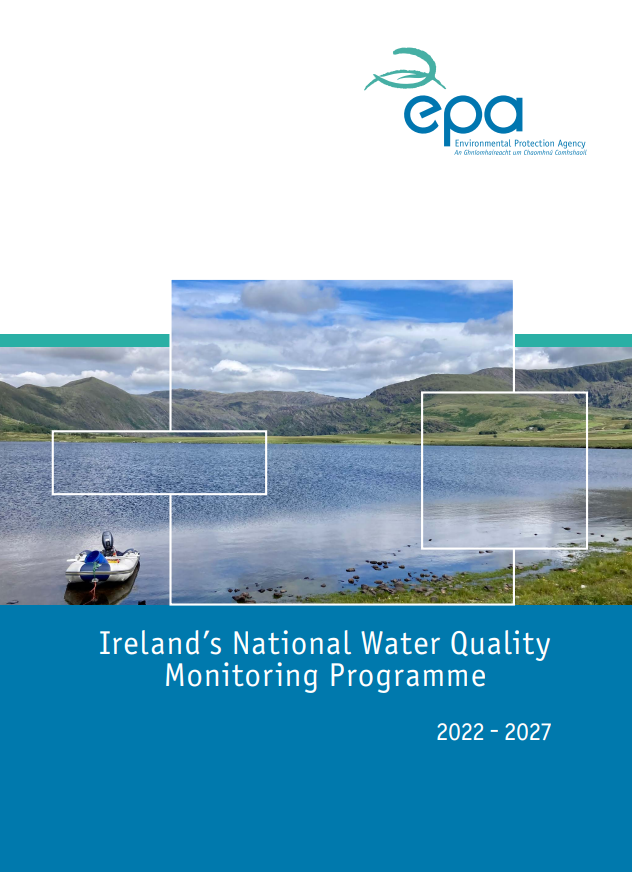
Ireland’s National Water Framework Directive Monitoring Programme, 2022-2027
The EPA runs a national monitoring programme to check water quality under the WFD. It covers rivers, lakes, coastal waters, and groundwater using long-term checks and targeted surveys where problems are likely. This data tracks progress toward environmental goals and informs River Basin Management Plans.
The EPA has published Plain English factsheets on how water quality is monitored and assessed under the WFD:
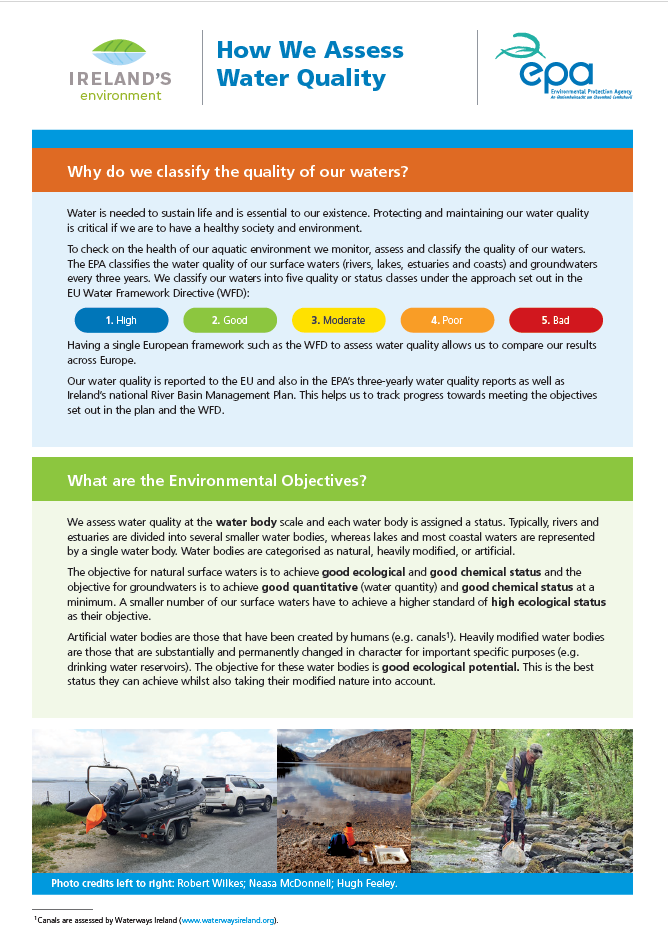
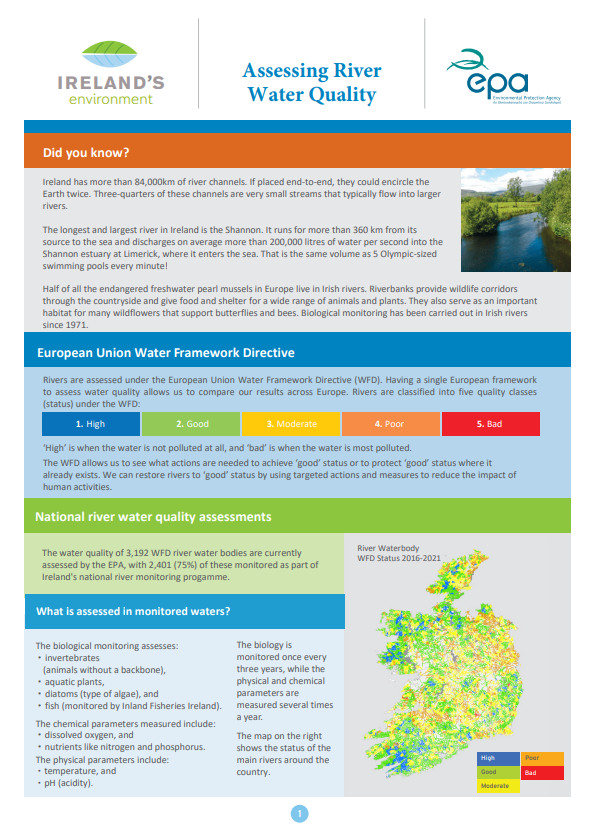
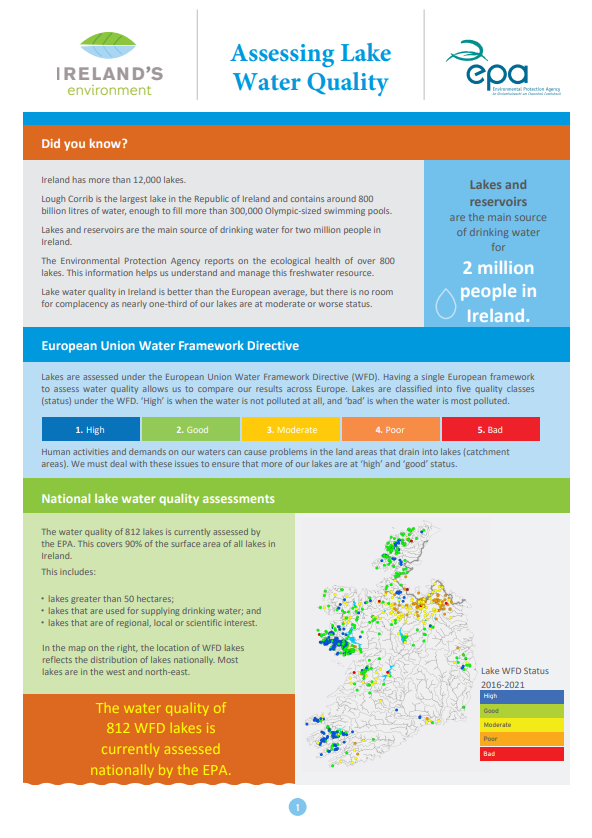
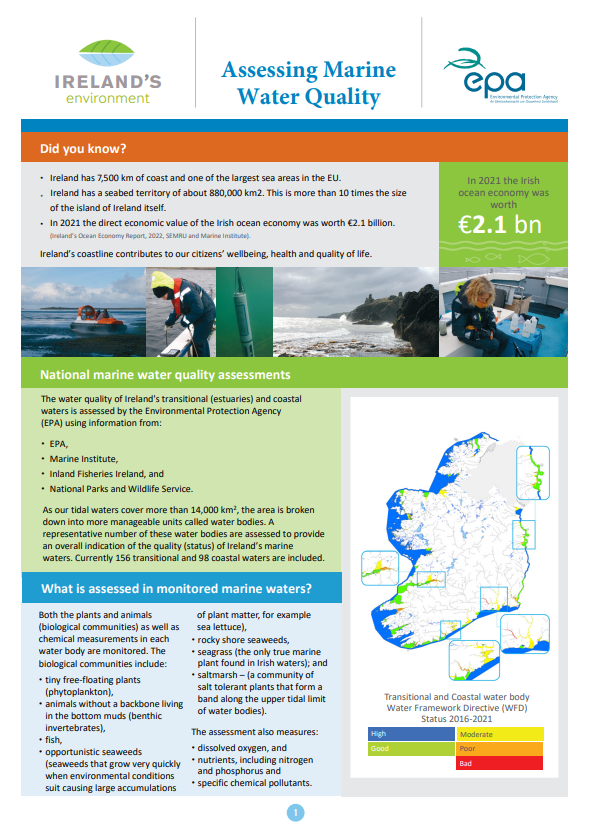
EPA publications on Freshwater and Marine monitoring under the WFD, including water quality reports, a monthly Hydrology Bulletin and technical guidance documents are on the EPA website: Monitoring & Assessment: Freshwater & Marine Publications | Environmental Protection Agency
How the WFD is implemented
The WFD is implemented through River Basin Management Plans (RBMPs) in six-year cycles. Each cycle provides an opportunity to assess water conditions at different stages and set out actions to achieve water quality objectives.
We are currently in the 3rd cycle River Basin Management Plan 2022 – 2027. The overall aim of the plan is to ensure that our natural waters are sustainably managed and that freshwater resources are protected so as to maintain and improve Ireland’s water environment.
| Cycle | Years | Links |
|---|---|---|
| WFD Cycle 1 | 2010-2015 | These RBMPs are in the Documents Archive on catchments.ie |
| WFD Cycle 2 | 2016-2021 | River Basin Management Plan 2018-2021 |
| WFD Cycle 3 | 2022-2027 | River Basin Management Plan 2022 – 2027 |
Who’s responsible?
The Minister for Housing, Local Government and Heritage is responsible for implementation of the WFD in Ireland.
- Department of Housing, Local Government and Heritage (DHLGH) – policy lead, necessary legislation and resourcing the Plan.
- The Environmental Protection Agency (EPA) – monitoring, assessing, and reporting on water quality, and for providing key technical and scientific data used in policy and plan implementation
- River Basin Management Service (RBMS) – working with local authorities and other bodies, co-ordinating the implementation of measures on the ground and gathering the local knowledge required for successful delivery of many potential measures.
catchments.ie is collaboration between DHLGH, the EPA and RBMS.
National committees
- Water Policy Advisory Committee (WPAC): provides policy advice and assistance to the Minister for Housing, Local Government and Heritage on implementing the WFD and broader water resource issues. It also supports the making of River Basin Management Plans, including programmes of measures.
- National Co-ordination and Management Committee (NCMC): RBMP measures are managed and strengthens partnerships for implementation. It links science, policy, and programme delivery, agrees work programmes, and reports to WPAC on progress and barriers.
- National Technical Implementation Group (NTIG): oversees technical implementation of the RBMP at a national level. It coordinates actions among State actors, addresses operational barriers, and promotes consistent regional implementation. Chaired by EPA. View NTIG minutes.
WFD Regional Committees
Ireland’s 31 local authorities coordinate water quality management across a five-region structure:
- Border
- Midlands and East
- South East
- South West
- West
The structure allows for collaboration and knowledge sharing relating to the delivery of improvement measures at both regional and local levels. This ensures a consistent approach across the regions (and, for the Border committee, also with Northern Ireland agencies).
- Regional Water & Environment Management Committees – senior management from RBMS, local authorities, and EPA
- Regional Water & Environment Operational Committees – specialist staff from RBMS, local authorities, and relevant public bodies
The River Basin Management Service provides the secretariat for both committees. View committee minutes.
The Water Forum (An Fóram Uisce)
The Water Forum is Ireland’s statutory national stakeholder body, advising the Minister on water policy and management. It brings together 27 members from 16 sectors, including agriculture, environment, business, community, and water consumers, to ensure broad input into policy development.
The Forum uses scientific evidence, expert advice, and commissioned research to shape positions on water quality, conservation, and future-proofing. It provides recommendations to government, Irish Water, and regulators, and publishes reports and policy submissions to support sustainable water management.
Public Participation
A key part of the Water Framework Directive (Article 14) is public participation. Ireland works with communities to protect and improve water quality because local knowledge is vital for decision-making.
The WFD has been a pioneering piece of legislation because it mandates public participation, recognising the value of local knowledge and community involvement in decision making processes.
LAWPRO’s Community Water Officers work with local communities all around Ireland and you can find contact details for your local Community Water Officer here: Communities Team – Local Authority Waters Programme
Who is involved?
Quite simply, everyone in Ireland has a role to play. This can be from something as simple as making sure you don’t pollute your local stream, or a local community working together to establish a Rivers Trust to enhance the rivers and lakes in their area, to a Government Department or Agency helping a Minister implement a new policy to help protect and enhance all our water bodies.
This website has been developed and is maintained by the Environmental Protection Agency, and is a collaboration between the Department of Housing, Planning and Local Government, the Environmental Protection Agency, and the River Basin Management Service.

River Basin Management Service
The River Basin Management Service coordinates the efforts of local authorities and other public bodies in the implementation of the River Basin Management Plan, and supports local community and stakeholder involvement in managing our natural waters, for everyone’s benefit.
Environmental Protection Agency
The EPA is responsible for coordinating the monitoring, assessment and reporting on the status of our 4,842 water bodies, looking at trends and changes, determining which waterbodies are at risk and what could be causing this, and drafting environmental objectives for each.

Department of Housing, Local Government and Heritage
The Department is responsible for making sure that the right policies, regulations and resources are in place to implement the Water Framework Directive, and developing a River Basin Management Plan and Programme of Measures to protect and restore our waters.