
Inland Fisheries Ireland has published a summary report on 26…
European Commission publishes independent review of Blackwater Fish Kill response
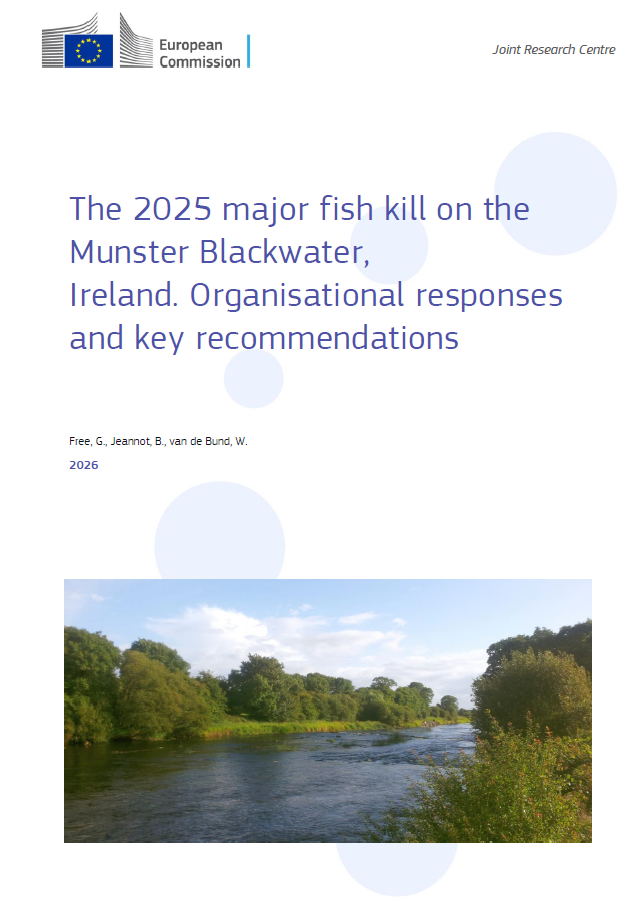
The Blackwater fish kill review published by the European Commission’s Joint Research Centre (JRC) examines how State agencies responded to the major fish kill on the Munster Blackwater in August 2025. The event, Ireland’s largest recorded fish kill, resulted in an estimated 42,000 fish deaths.
Overview of Incident
In August 2025 a major fish kill occurred on the River Blackwater. It caused extensive salmon and trout mortalities and prompted a multi‑agency investigation led by Inland Fisheries Ireland. Investigators concluded that a short‑lived pollution event most likely caused the incident. However, the exact source could not be identified.
A summary report of what happened, the investigation, and the findings is available in the Summary Report of the Investigation into Fish Mortalities in the Munster Blackwater, published by Inland Fisheries Ireland in September 2026.
Main Findings
The Blackwater fish kill review evaluates how agencies responded and sets out recommendations to strengthen future preparedness.
The report highlights several key areas:
- Continuous monitoring: It recommends installing continuous monitoring stations on major Irish rivers to support faster detection of pollution events.
- A shared response protocol: Agencies should develop and test a single multi‑agency procedure for major fish kills. This protocol should include comprehensive sampling of the river as well as discharging facilities in the catchment.
- Clear communication: Agencies should share information more quickly and explain uncertainties and investigative steps in real time.
- Research and prevention: Research should determine high risk areas for fish kills for preventative action and to determine the economic cost of the fish kill.
- Catchment restoration: The report calls for stronger restoration efforts to meet Water Framework Directive objectives and to improve resilience in the Blackwater catchment.
Learn more:
Environmental Protection Agency news release. EPA Welcomes Findings of Joint Research Centre Review into Blackwater Fish Kill Response | Environmental Protection Agency
Department of Climate, Energy and the Environment press release. Minister Dooley welcomes publication of independent report on the Blackwater fish kill
Catchments.ie post, September 26, 2025: Summary Report Published on Fish Mortalities in the Blackwater – Catchments.ie – Catchments.ie
Related Posts

About author