


The Bathing Water Directive (2006/7/EC) was transposed into Irish law…
Out of Season Bathing – Know the Risks
Open water swimming, at sea or in lakes and rivers, has both physical and mental health benefits for us all. During colder seasons, there is an increased risks of water borne illness, due to less favourable water quality resulting from increased rainfall and lower UV light outside of summer.
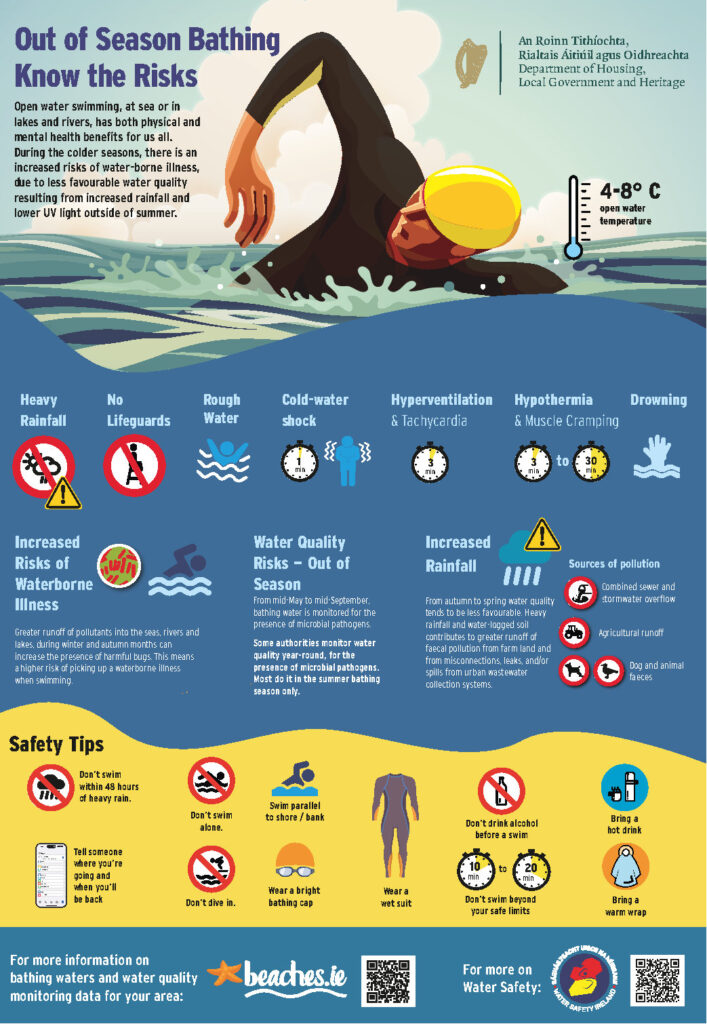
Protect your health with the 48 hour rule
After a heavy rainfall event it is important to avoid contact with the water for at least 48 hours to prevent the risk of getting a recreational water illness. It is best to follow the 48 hour rule after significant rainfall even if beaches.ie, the local authority website or beach noticeboard show the water quality is okay for swimming as the information is showing the water quality of the last reported water sample and this may not accurately represent current water quality. This is because when local authorities sample the water at your favourite beach and bathing area, it takes 2-3 days to analyse the sample and then time to process results and disseminate to the public.
The rainfall effect
Rain washes contaminants into our waterways from a number of different places. During wet weather events, surface water washes into our streams, rivers, lakes, and coasts from both urban centres and rural areas. Storm water can contain human or animal waste, toxic materials, heavy metals, sanitary debris, agricultural and urban runoff. In our major cities or large towns rainfall is the leading cause of sewage bypasses and combined sewer overflows. This is because wastewater treatment plants and combined sewer systems don’t have the capacity to manage the increased volume of wastewater. Wastewater ends up bypassing the complete treatment process and flows into the nearest watercourse whether it is into the river, lake or the sea.
Recreational water illnesses
Raw, or even partially raw sewage, that is released into bathing waters can be hazardous to human health. Sewage contains faecal bacteria, pathogens, viruses and possibly even parasites. The most common health issue correlated with polluted water is gastroenteritis. Other minor illnesses associated with swimming in contaminated water include eye, ear, nose and/or throat infections, and skin rashes. In rare occurrences, more serious illnesses that can be contracted include dysentery, infectious hepatitis, and severe gastroenteritis.
48 hour rule
After a heavy rainfall event it is best to avoid recreational water activities at your beach or bathing area for at least 48 hours to protect your health. It is especially important in areas where sewage may pose a risk. The 48 hour rule applies to swimming and paddling and other recreational water activities, whether submerged or not, such as canoeing, surfing and even fishing. Following the 48 hour rule can prevent the risk of an upset tummy – or worse!
Learn more
Beaches and the Bathing Water Directive | Environmental Protection Agency
Bathing Water – Health Protection Surveillance Centre
Bathing Water Advice & Guidance Documents – Beaches.ie – Beaches.ie
Managing our beaches and other bathing waters: who does what? – Beaches.ie – Beaches.ie
Dog fouling impacts on bathing water quality – Catchments.ie – Catchments.ie
Related Posts

About author