

The EPA released the Drinking Water Quality in Private Group Schemes…
Drinking Water Quality in Private Group Schemes and Small Private Supplies 2025
Drinking water quality in private supplies continues to present public health risks
Key points :
- Water quality in private water supplies (small private supplies and private group schemes) is not as good as public water supplies.
- Small private supplies provide drinking water to, for example, schools, nursing homes and hotels. Private group schemes cover 376 community run supplies.
- 1,600 small private drinking water supplies are registered, but the total number remains unknown as there is no legal requirement to register.
- Unregistered supplies are not sampled by local authorities and may unknowingly be providing unsafe drinking water to consumers.
- Failures due to E. coli in private group schemes reduced to 14 in 2025, down from 24 in 2024.
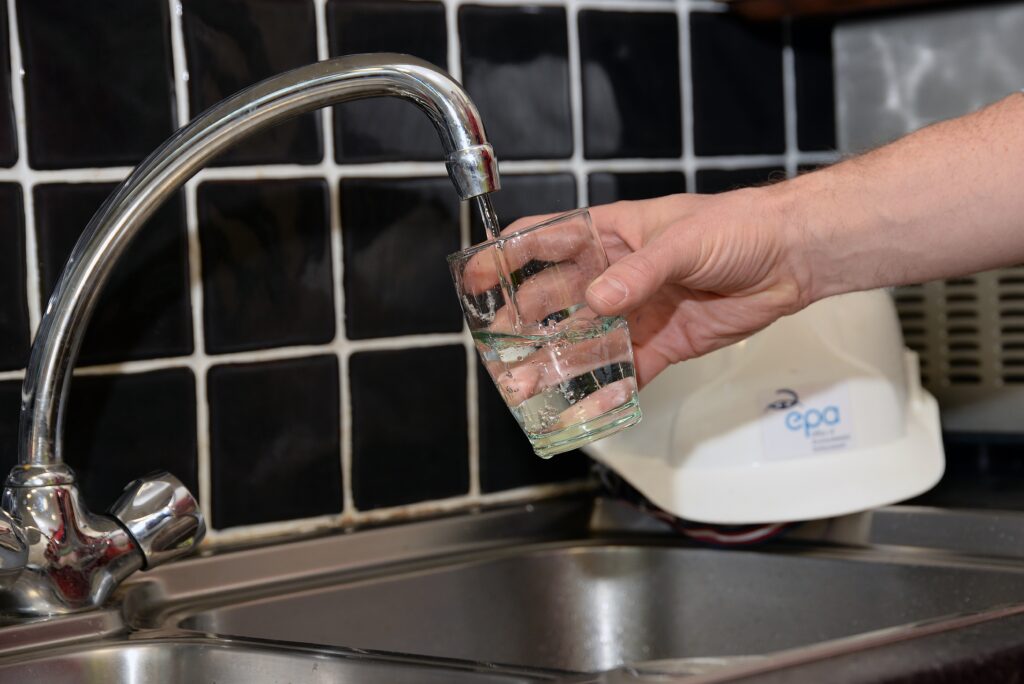
The Environmental Protection Agency (EPA) has released its Drinking Water Quality in Private Group Schemes and Small Private Supplies 2025 report. The report highlights that drinking water quality in private supplies continues to fall short of the standards achieved by public supplies delivered by Uisce Éireann.
There are approximately 370 private group schemes supplying drinking water to more than 194,000 people in rural communities across Ireland. In addition, over 1,600 small private supplies are registered with local authorities, providing drinking water from their own wells to commercial and public activities, such as schools, crèches, nursing homes, hotels, camping sites and sports clubs.
The Department of Housing, Local Government and Heritage (DHLGH) in 2023, identified the need to strengthen the governance, oversight and management of private water supplies. Progress on implementing measures to address this deficit has been slow. The DHLGH must implement these reforms as a priority.
A key first step is to make registration a legal obligation for small private supplies. Currently approximately 1,600 small private supplies are registered, but it is estimated that there are many more not registered.
Launching the report, Pat Byrne, Director, EPA Office of Radiation Protection and Environmental Monitoring said:
“It is unacceptable that people visiting a local business or using local amenities could unknowingly consume water from a well that is not registered or sampled, putting themselves and their family’s health at risk. Suppliers should act immediately and register their supplies, so they are monitored by local authorities, giving suppliers and consumers confidence in the quality of their drinking water.”
Small Private Supplies – Water Quality Compliance
The presence of E. coli bacteria in drinking water means it is contaminated and that it poses a risk to people’s health. Small private supplies continue to have poorer E. coli compliance than public water supplies provided by Uisce Éireann, with 67 supplies failing the standard in 2025. This is a compliance rate of 95%.
Private Group Schemes – Water Quality Compliance
Fourteen private group schemes, supplying 1,854 people, had E. coli failures in 2025 – down from 24 in 2024. Six of these, however, had repeat failures of E. coli in both 2024 and 2025 due to a combination of operational and infrastructural issues creating risks for consumers.
In 2025, seventeen private group schemes, serving 19,362 people, failed the Trihalomethane (THM) standard. This represents only a minor improvement on 2024, when 19 schemes failed to meet the standard.
Noel Byrne, Programme Manager of the EPA’s Office of Radiation Protection and Environmental Monitoring said:
“While there has been some improvement in E. coli compliance in group schemes, the continued failures in several private group schemes shows that more action is needed. Local authorities must work closely with suppliers to identify the causes of failures and ensure corrective actions are put in place. Where suppliers do not act, or where failures persist, local authorities must escalate enforcement action, so consumers are protected.”
Related Posts
About author