Understanding Seagrass in Ireland
Seagrass: The Hidden Life Beneath Our Shores Seagrass meadows are among Ireland’s most important coastal habitats, supporting biodiversity and helping […]
Read More
Seagrass: The Hidden Life Beneath Our Shores Seagrass meadows are among Ireland’s most important coastal habitats, supporting biodiversity and helping […]
Read More
Building on the EPA’s latest Drinking Water Report: Strengthening resilience and public trust in drinking water services Read An Fóram […]
Read More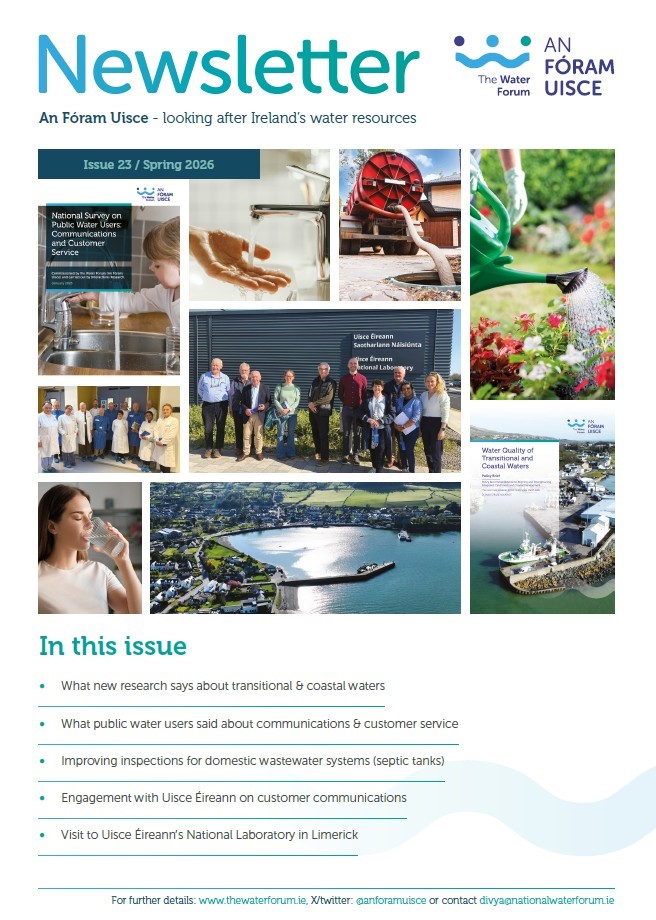
What do we know about the health of Ireland’s transitional and coastal waters? Only 30% of Ireland’s transitional waters currently […]
Read More
Hydrology bulletin on rainfall, river flows, lake levels, groundwater levels and spring outflows for May 2026. May 2026 was mild […]
Read More
EPA warns faster action is needed as water quality shows little overall improvement in 2025 Key points : The Environmental […]
Read More
This report outlines the farm inspection activity under the Good Agricultural Practice (GAP) Regulations and associated enforcement actions undertaken by […]
Read More
Update (June 2026): In-person tickets are now sold out. Online registration remains open. Registration for the annual EPA Water Conference […]
Read More
The National Economic and Social Council (NESC) is currently undertaking research on Ireland’s approach to climate action and sustainability and […]
Read More
The European Commission has launched a Call for Evidence to support the development of a new EU-wide Action Plan on […]
Read More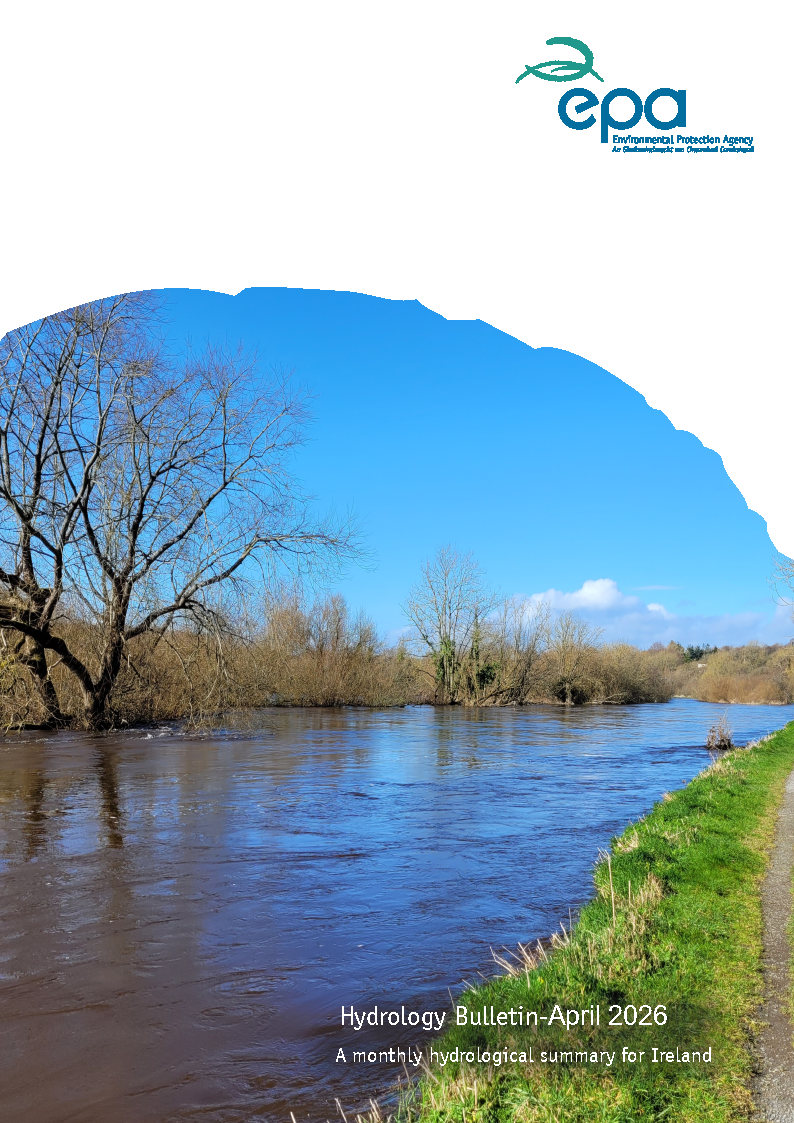
Hydrology Summary Bulletin outlining the flows in rivers, rainfall, lake and turlough levels, groundwater levels and spring outflows of over […]
Read MoreQuite simply, everyone in Ireland has a role to play. This can be from something as simple as making sure you don’t pollute your local stream, or a local community working together to establish a Rivers Trust to enhance the rivers and lakes in their area, to a Government Department or Agency helping a Minister implement a new policy to help protect and enhance all our water bodies.
This website has been developed and is maintained by the Environmental Protection Agency, and is a collaboration between the Department of Housing, Planning and Local Government, the Environmental Protection Agency, and the River Basin Management Service.

The River Basin Management Service coordinates the efforts of local authorities and other public bodies in the implementation of the River Basin Management Plan, and supports local community and stakeholder involvement in managing our natural waters, for everyone’s benefit.
The EPA is responsible for coordinating the monitoring, assessment and reporting on the status of our 4,842 water bodies, looking at trends and changes, determining which waterbodies are at risk and what could be causing this, and drafting environmental objectives for each.

The Department is responsible for making sure that the right policies, regulations and resources are in place to implement the Water Framework Directive, and developing a River Basin Management Plan and Programme of Measures to protect and restore our waters.