A Community River Trust in County Kilkenny is inspiring local…
Free Learning Opportunity in the Border Region : ‘Protecting Shared Waters’ ECO Programme
Expressions of interest are now being invited for the upcoming ECO Programme within the EU Peace Plus Protecting Shared Waters project.
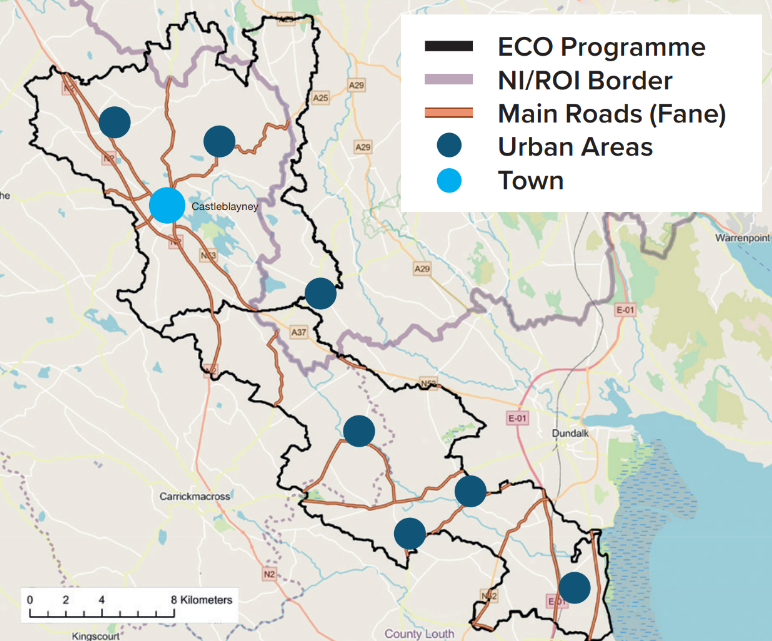
The programme has been designed around the rivers, wetlands, lakes, and communities of the Fane Catchment and will draw on local examples, issues, and opportunities wherever possible.
See the map below showing the project area (Fane Catchment):
The ECO programme will consist of six Saturday workshops taking place between September and December 2026, combining indoor learning with practical, field-based activities around protecting local waters. Sessions are expected to run for approximately 6 to 7 hours, from morning through to the afternoon.
Provisional workshop dates (subject to confirmation) are:
- September: 5th, 26th
- October: 10th
- November: 7th, 21st
- December: 5th
Proposed ECO Programme Themes and Activities
- Explore how local waterways have shaped, and been shaped by, communities across the Fane Catchment.
- Learn about water quality, water conservation, and overall catchment health.
- Develop an understanding of biodiversity and water-dependent habitats, including local wildlife and bioindicators.
- Explore Nature-based Solutions (NbS) in practice, including buffer strips, sediment traps, leaky dams, integrated wetlands, and other measures.
- Take part in practical activities such as water audits, kick sampling and citizen science initiatives.
- Visit sites to explore local water quality and landscapes, view Nature-based Solutions in action, and discuss how these approaches could be applied within local communities.
- Learn from guest speakers and technical experts, including organisations working in water management and restoration.
- Explore opportunities for community-led action and develop a pipeline of projects with the support of the project team.
- Pitch project ideas to a panel of experts leading to a shortlist of successful proposed projects.
Knowledge Exchange Events
Alongside the ECO Programme, a series of Knowledge Exchange Events will be delivered throughout the project. These events will be rolled out over time and may include:
- Visits to demonstration farms and sites to explore Nature-based Solutions and water conservation measures in practice.
- Cross-border learning opportunities between communities in the Fane and Strule Catchments.
- Networking and knowledge-sharing with other cross-border and EU-funded projects working in the region.
- Sharing local experiences, good practice examples, and innovative approaches to water protection.
Related Posts
About author