
The EPA has today released the Water Quality in 2017:…
Water Quality in 2025: An Indicators Report
EPA warns faster action is needed as water quality shows little overall improvement in 2025
Key points :
- There has been little change in water quality indicators in 2025. Overall water quality remains unsatisfactory in many areas.
- Excess nutrients from agriculture and wastewater remain the greatest challenge to water quality improvements. Phosphorous and nitrate levels are still too high in many of our waters.
- Some areas show improvements which is promising, but these are being offset by declines elsewhere. The scale and pace of implementation of actions to protect and restore water quality needs to be increased.
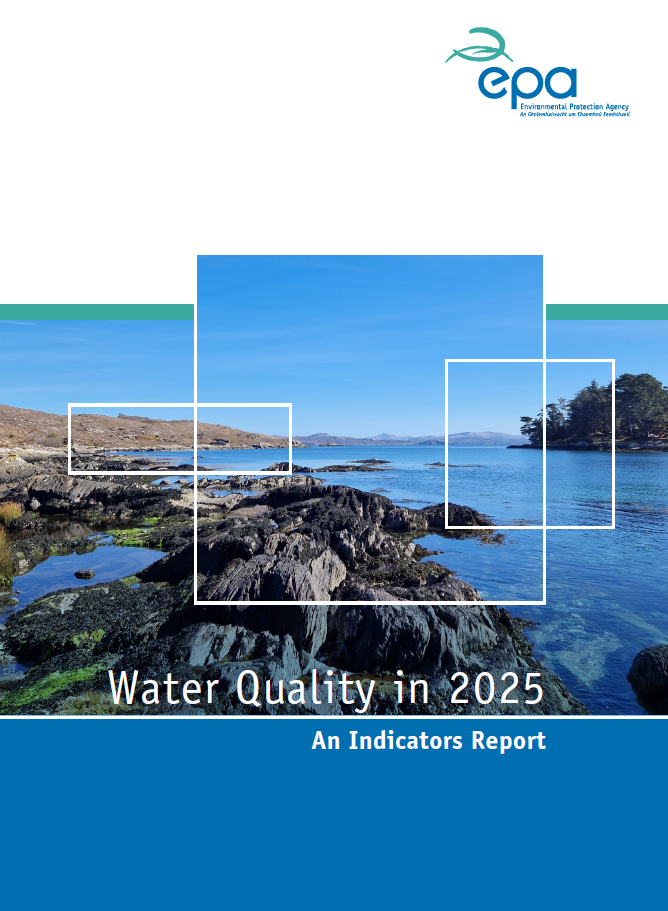
The Environmental Protection Agency (EPA) has published Water Quality in 2025: An Indicators Report. The report provides an update on the key indicators of the quality of Ireland’s rivers, lakes, estuaries, coastal and groundwaters using monitoring data collected in 2025.
Overall, the report shows no major change in water quality in 2025. Nutrient levels remain too high in a large proportion of water bodies. Levels fluctuate year on year but are not improving overall over the long term. The biological health of our rivers and lakes has shown little change with slightly more than half (54%) in good or better biological quality.
Commenting on the report, Roni Hawe, Director of the EPA’s Office of Evidence and Assessment, said:
“Ireland’s water quality is not improving overall, and that should concern all of us. The decline in high status water bodies is a serious warning sign. These are our best waters, and once they are lost, they are difficult to recover. Clean water underpins healthy ecosystems, safe drinking water, recreation and local economies. We need to act with greater urgency to cut pollution and protect the waters we all depend on.”
“Our actions must match the scale of the problem. Targeted action and measures tailored to the specific challenges affecting each water body must be accelerated to shift the overall trend towards improving water quality.”

Excess nutrients, particularly nitrogen and phosphorus, from activities such as farming, poorly treated wastewater discharges and runoff from land remain the greatest challenge. When too much of these nutrients get into rivers, lakes and coastal waters, they can cause an overgrowth of algae which depletes oxygen and chokes up the habitat for other species.
The report highlights a positive improvement in one catchment, the Ballyteigue-Bannow catchment in Wexford, where 6 of the 16 rivers surveyed in 2025 improved in biological quality. This is a welcome sign and further assessment is needed to determine what specific changes occurred in this catchment that might have led to the improvements.
Dr Jenny Deakin, EPA Programme Manager added:
“It is important to recognise that there are localised improvements in water quality in some areas, which is very welcome. It is essential that information is collected and shared by all sectors on what measures are being implemented and where. Each sector has developed plans, required under the Water Action Plan 2024, which outline the actions they are undertaking to protect and restore water quality. This will help to better understand which measures are working so that the best actions can be accelerated.”
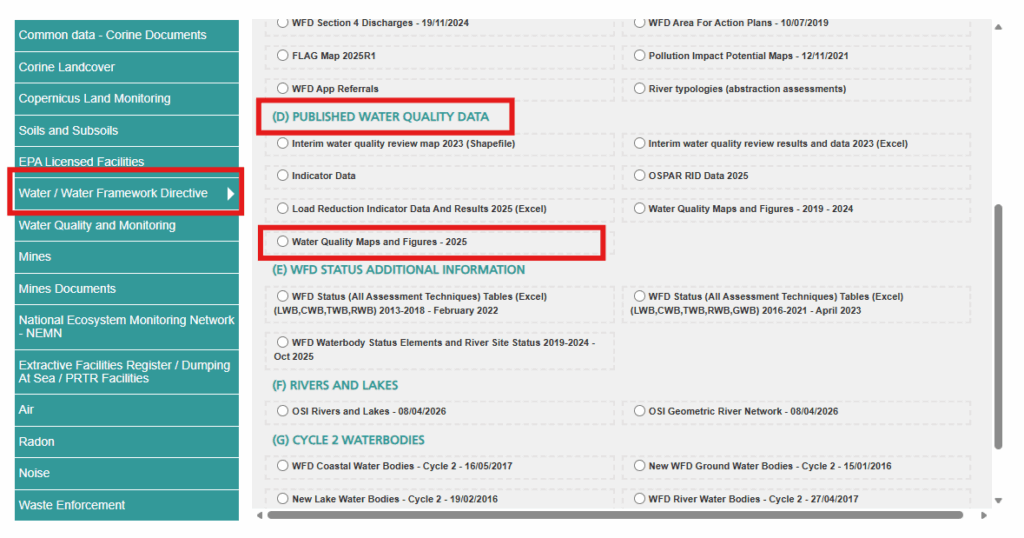
Maps and figures available for download
All maps and figures featured in the Water Quality in 2025: An Indicators Report are now available for download.
Water / Water Framework Directive tab > D) Published Water Quality Data > Water Quality Maps and Figures – 2025
Learn more
EPA water quality reporting
The EPA publishes a comprehensive assessment of Water Quality in Ireland every three years. The previous assessment was for the period 2019-2024. The EPA reports on the indicators of water quality in the intervening years to provide an update on trends in the biological quality and nutrient levels of our water bodies. This year’s indicators report provides an update on the water quality of Ireland’s rivers, lakes, estuaries, coastal, and groundwaters using monitoring data collected in the 2025 period.
Pressures impacting on waters
The EPA has published a series of reports on the main pressures impacting on waters which are available at Update on pressures impacting on water quality. Catchment level information on water quality is available here.
Water Action Plan 2024
The national Water Action Plan 2024 (also known as the River Basin Management Plan 2022-2027) sets out the national policy and actions that are being taken by all sectors to improve and protect water quality.
Sectoral Action Workplans
Sectoral Action Work Plans have been developed and published by a number of the sectors that impact water quality. The plans provide for the tracking of national scale actions assigned to those sectors (e.g. Agriculture, Forestry, urban waste water) in the Water Action Plan 2024. The objective of the Sectoral Action Work Plans is to ensure that the sector over time will no longer be a significant pressure on water status and will include information on how the sector will address all water bodies at risk from that pressure, in line with the Water Framework Directive objectives.
Related Posts
About author